A Department Store Full of Art: Walking from Namba to Shinsaibashi
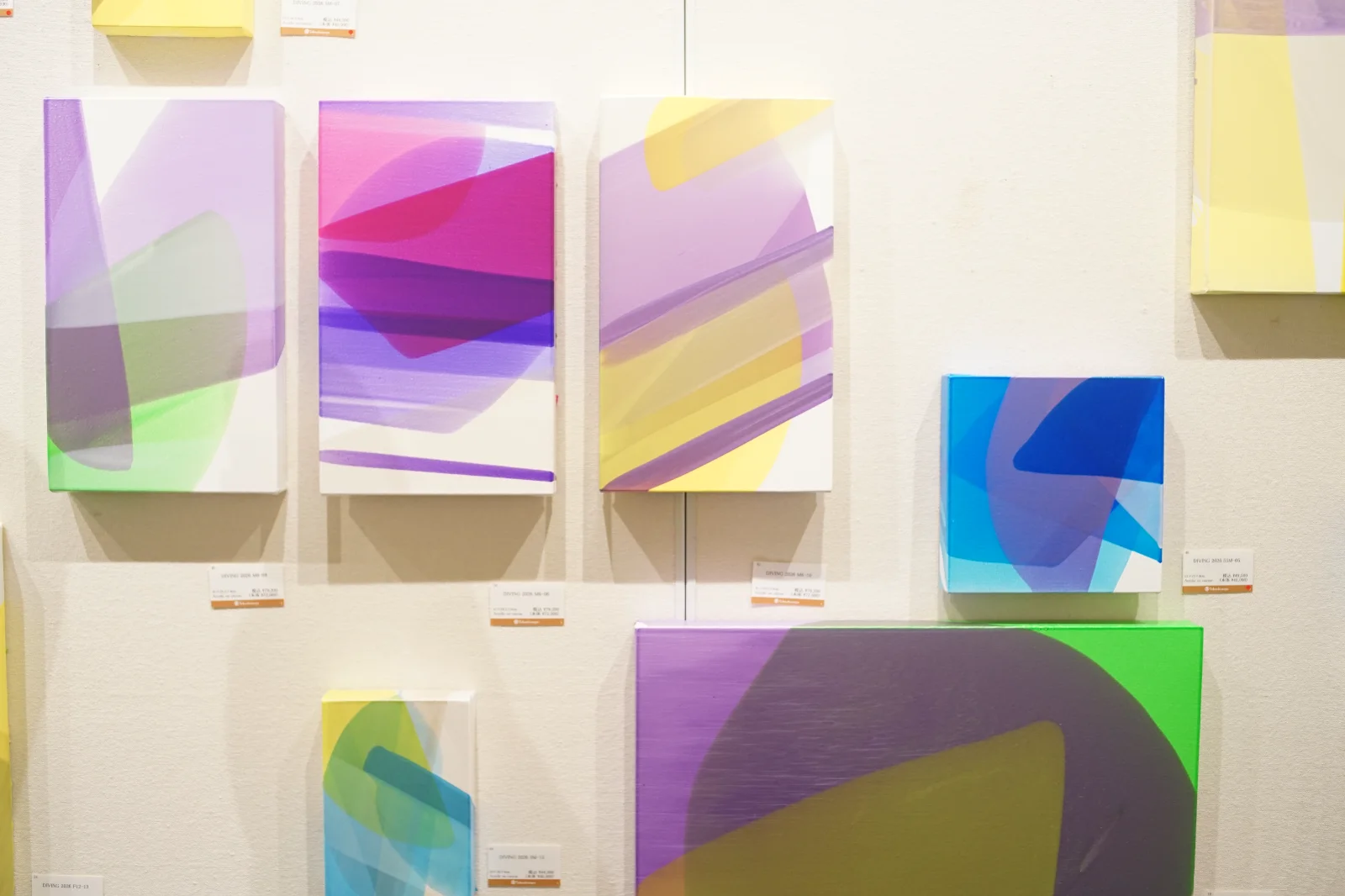
The escalator at Takashimaya Osaka rises past the same things it always has — leather goods, a perfume counter releasing its scent into the stairwell, a family arguing gently about where to eat lunch. Then, just inside the ground floor, a wall of paintings stops a few customers mid-stride: robots and rocket ships in colors too saturated for a department store, Kinugasa Taisuke's work, loud and unbothered by the seriousness usually expected of art. Most people keep walking. The escalator keeps moving.
This is what Osaka Art and Design does to a department store in late spring: it doesn't clear a room for art. It lets the art sit inside the store's actual traffic — between the bags and the cosmetics, on the floors people pass through on the way to somewhere else. For three weeks, Takashimaya Osaka becomes one of the city's largest galleries without ever stopping being a department store.
Up on the third floor, in the Rose Patio, K.Kough's installation Aoi no Sei holds a creature made of blue light, the size of a small child — a seed that slept underground holding its color, until memory gave it a shape. A few steps away, at the Pop-Up Station, Nishizaka Mami's photographs from a series called Memory and Landscape, In-Between hold onto something specific: the smell, the humidity, the particular light of a place she once stood in, folded into the image alongside what she actually saw there.
The sixth floor turns more hands-on. In the art gallery, three jewelers — Kanda Masayuki in glass, Takahashi Kengo in cast aluminum, Motonaga Kouko in painted acrylic — show work meant to be worn, not just looked at. Near Gallery NEXT, Nakajima Mugi has been painting without a brush: canvases tilted on an angle so that poured acrylic finds its own path downward, gravity doing the drawing instead of a hand.
On the seventh floor, where the store holds its larger exhibition halls, Maki Kahori has wrapped an entire room in drawing — fifty-some pieces of collage and line work, some thrown across the paper like something released, others as precise as a botanical illustration. She's been working from a recreated studio inside the hall itself, so the exhibition is also, some days, a person drawing in public. Next door, IWACO's TORUS WORLD with US uses fabric and unfamiliar materials to mark the places where different layers of a world seem to touch — a fraying, a tear, something breaking and reassembling itself at once.
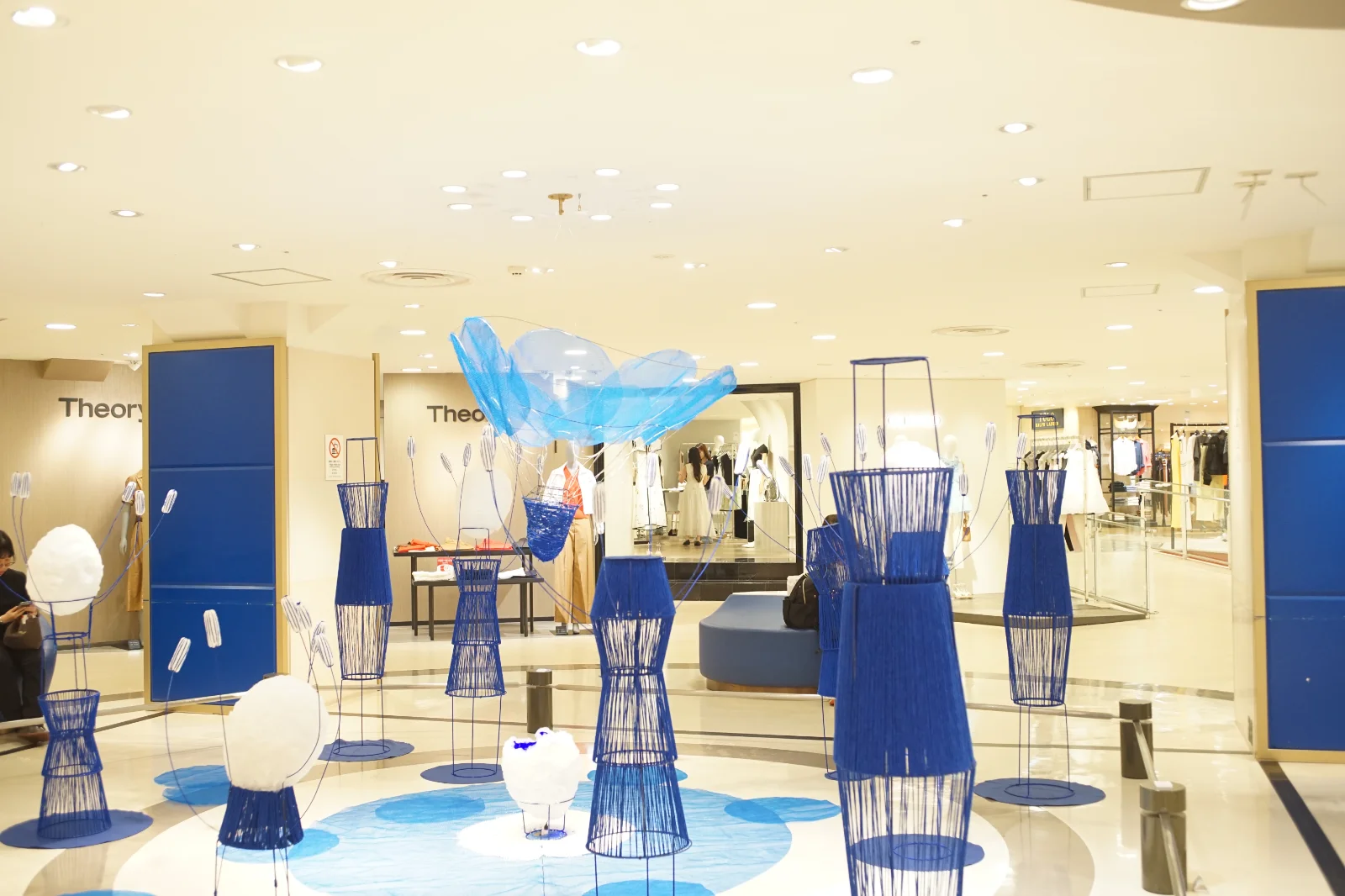
None of this asks to be approached quietly. Namba is the Osaka of postcards — Glico signs, tour groups, a department store where most people are there to buy something, not to contemplate anything. There's no hush here, no white cube. But that's also the point of staging it this way: art that has to compete with shopping bags and lunch plans ends up saying something true: most people meet culture in this city sideways, in passing, between errands.
We took our own break from looking at art the way Osaka takes its breaks — at the table. Hatsuse, a few minutes from Takashimaya, does okonomiyaki in private rooms with the grill built into the table, so you cook it yourself if you want to. It's not part of any art program. It didn't need to be.
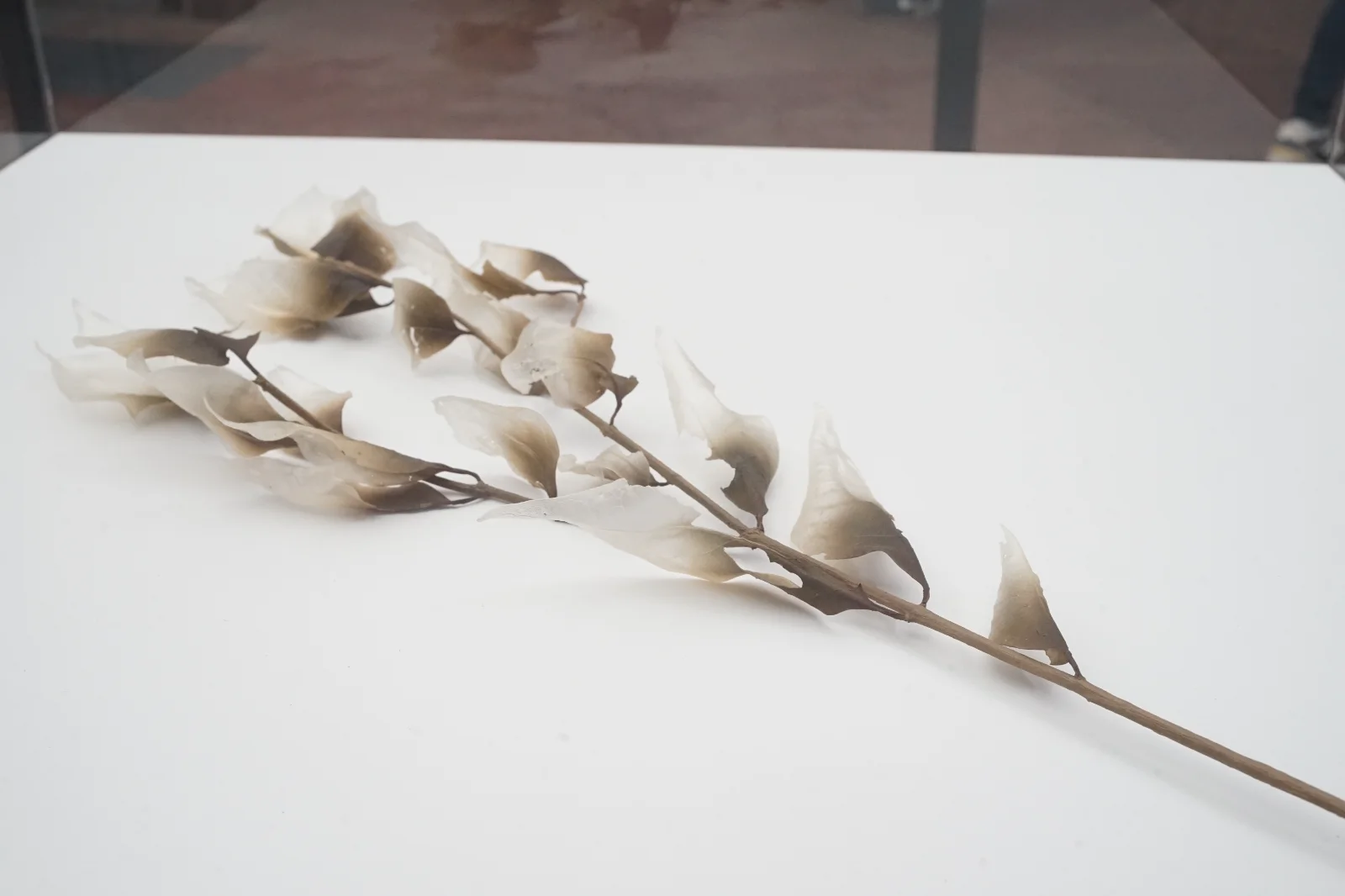
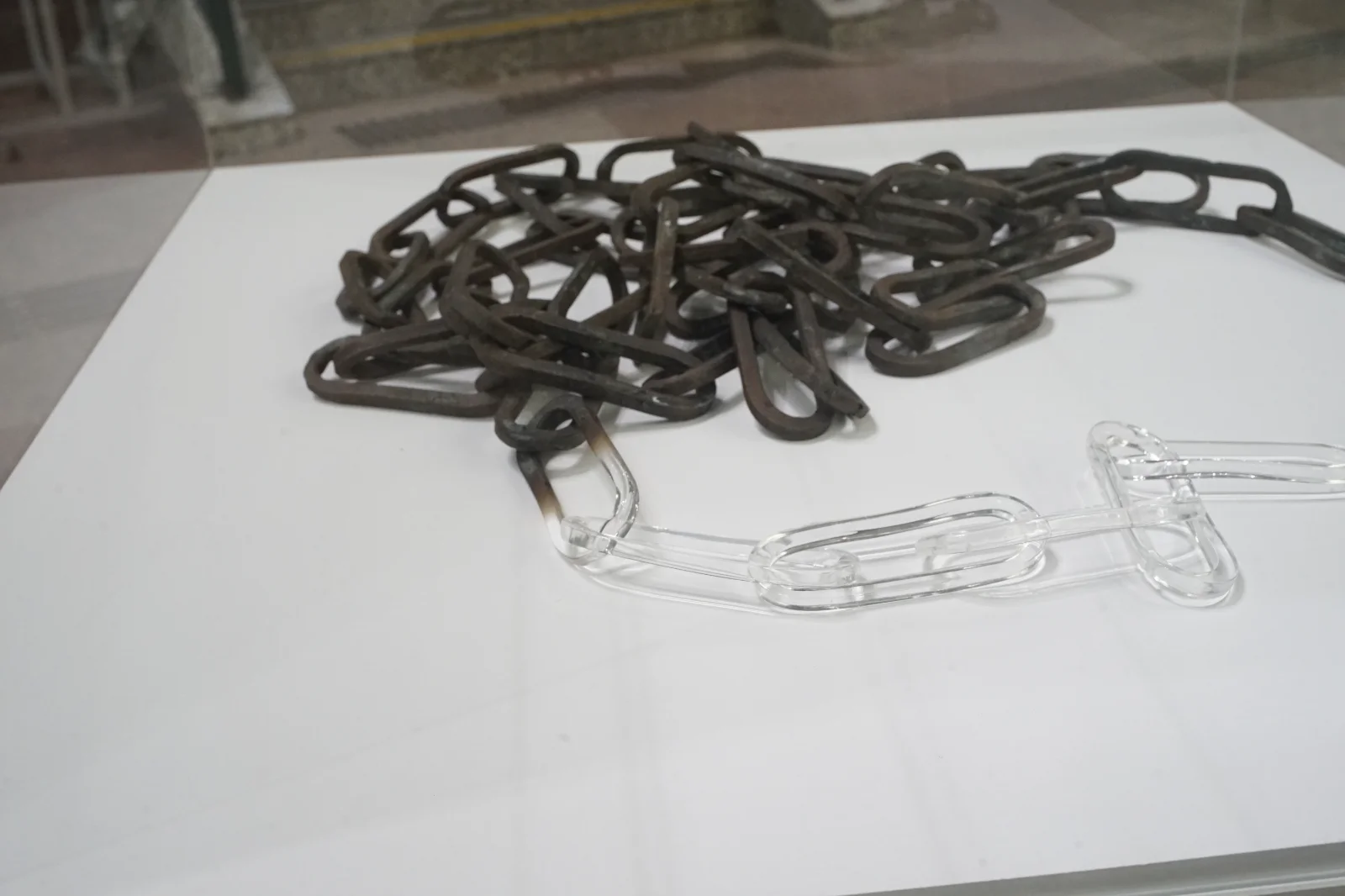
From there, the walk toward Shinsaibashi changes register. Crysta Nagahori — the long underground shopping street that runs beneath Minami — holds Ohnishi Nobuaki's _Re-Mirroring Matter_ near its southern fountain plaza. Ohnishi casts ordinary objects, a bulb, a dead branch, into resin molds and lets the cast object stand in for the thing itself, slightly displaced from what your eye expects. Standing over the clear resin, looking down into it, the artist says the scene in front of you seems to reverse, like a waterfall running backward — matter re-mirroring itself.
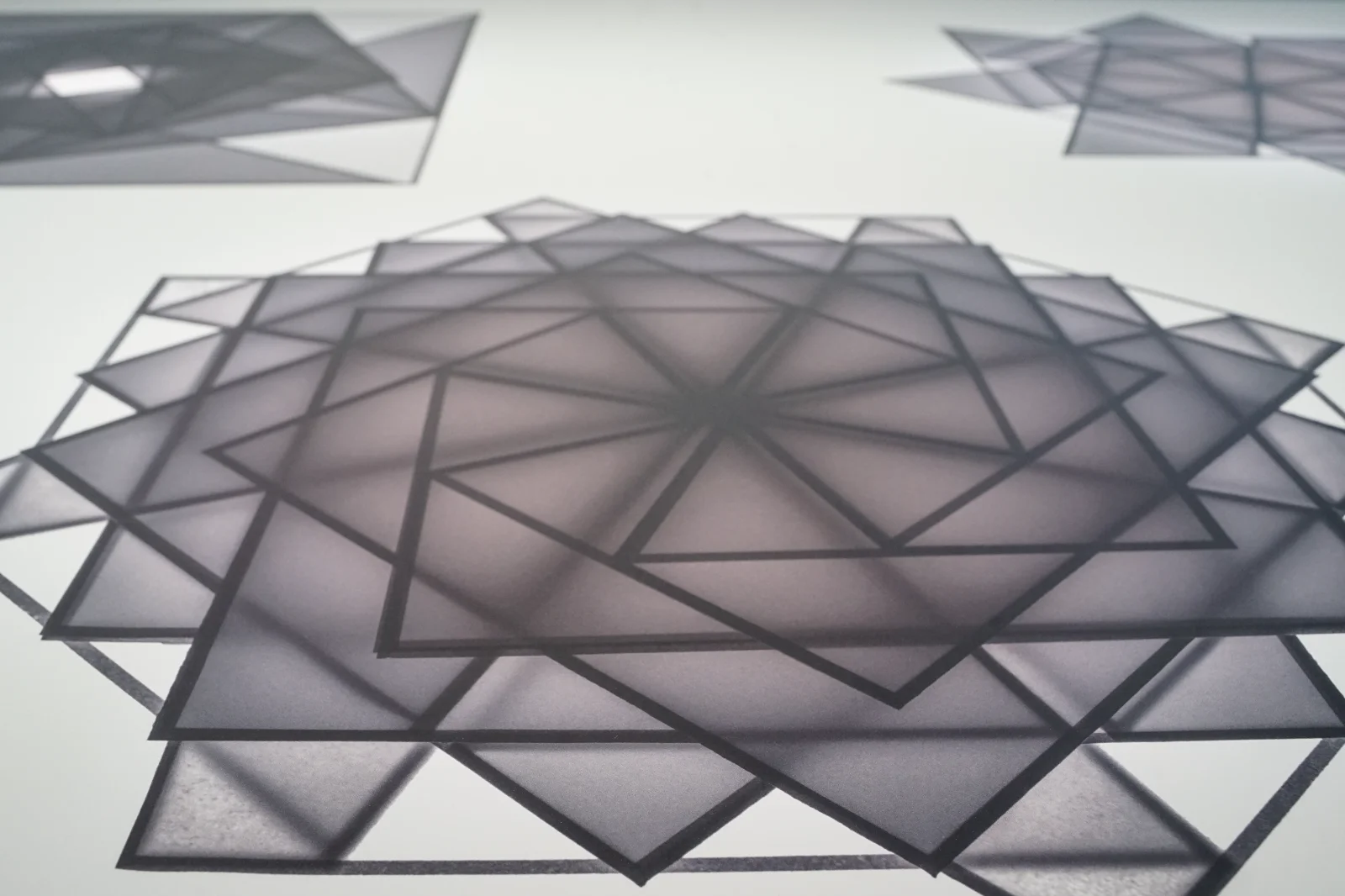
A short walk away, ISSEY MIYAKE SEMBA | CREATION SPACE is showing Nishimura Yoichiro's photograms and scanograms of 132 5. ISSEY MIYAKE's folded garments — light passed directly onto photographic paper to record the structure folded into the cloth, the part of the clothing you'd never otherwise see.
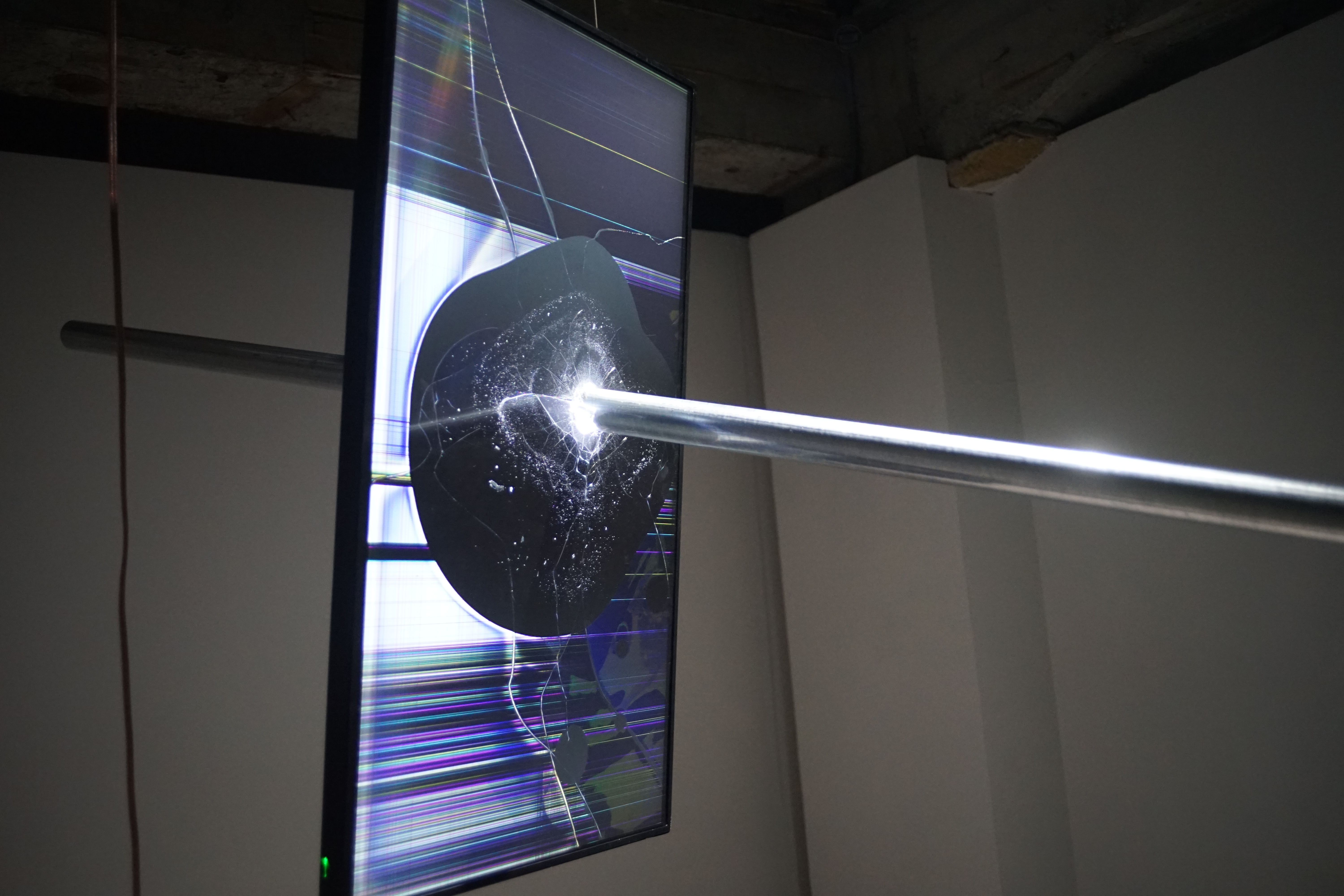
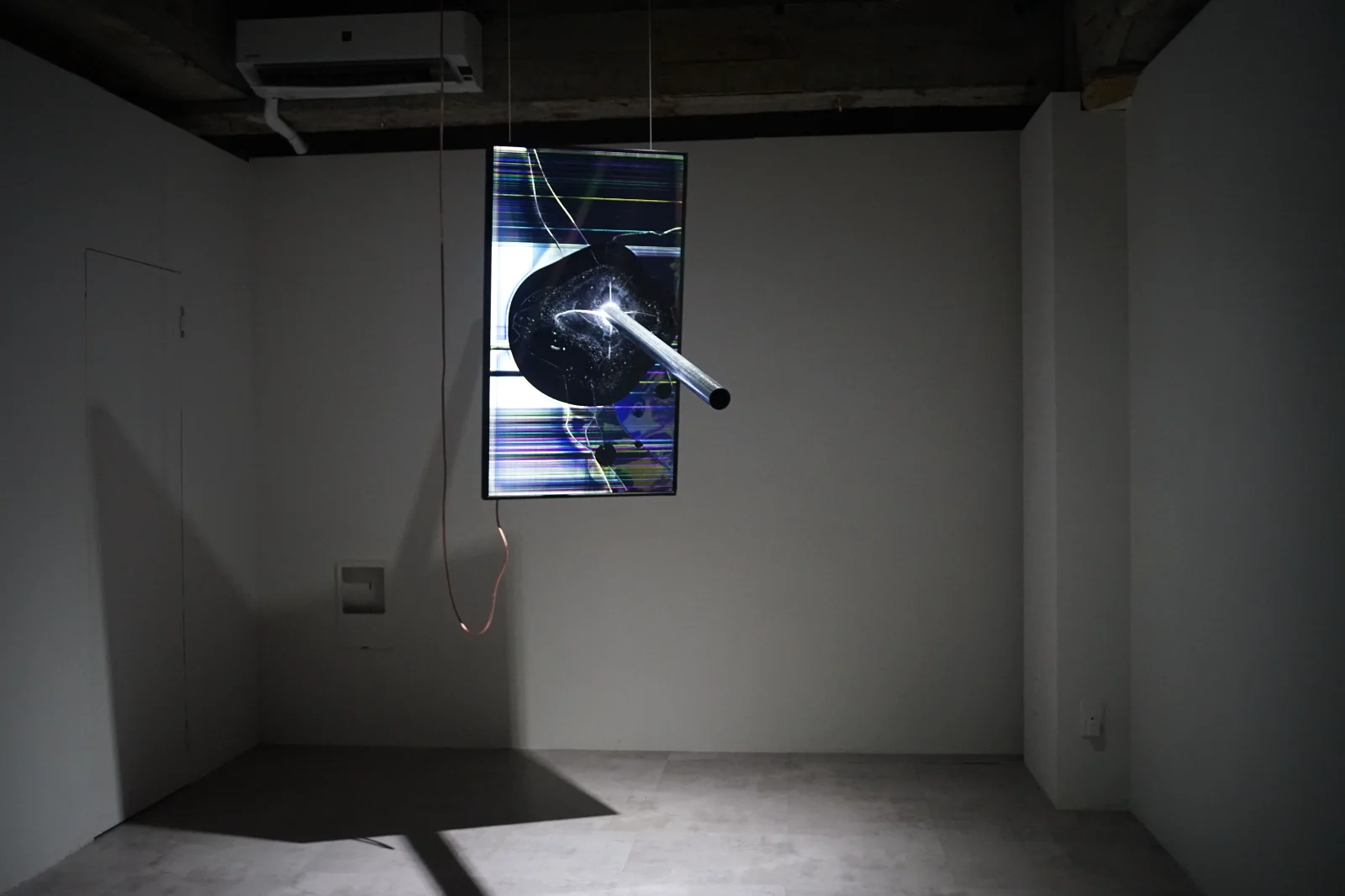
Around the corner, at Marco Gallery, three artists — Ohtake Maito, Nakagawa Yukio, and Houxo Que — work in flowers, monitors, and fabric to ask whether the moment when life, death, and beauty sit next to each other ever really ends. One piece by Houxo Que stays with me: a television screen run straight through by a steel pipe, the kind you'd expect to find on a construction site, not in a gallery. The pipe should have killed it. Instead the screen keeps burning, light still pushing out through the wound, refusing to go dark.
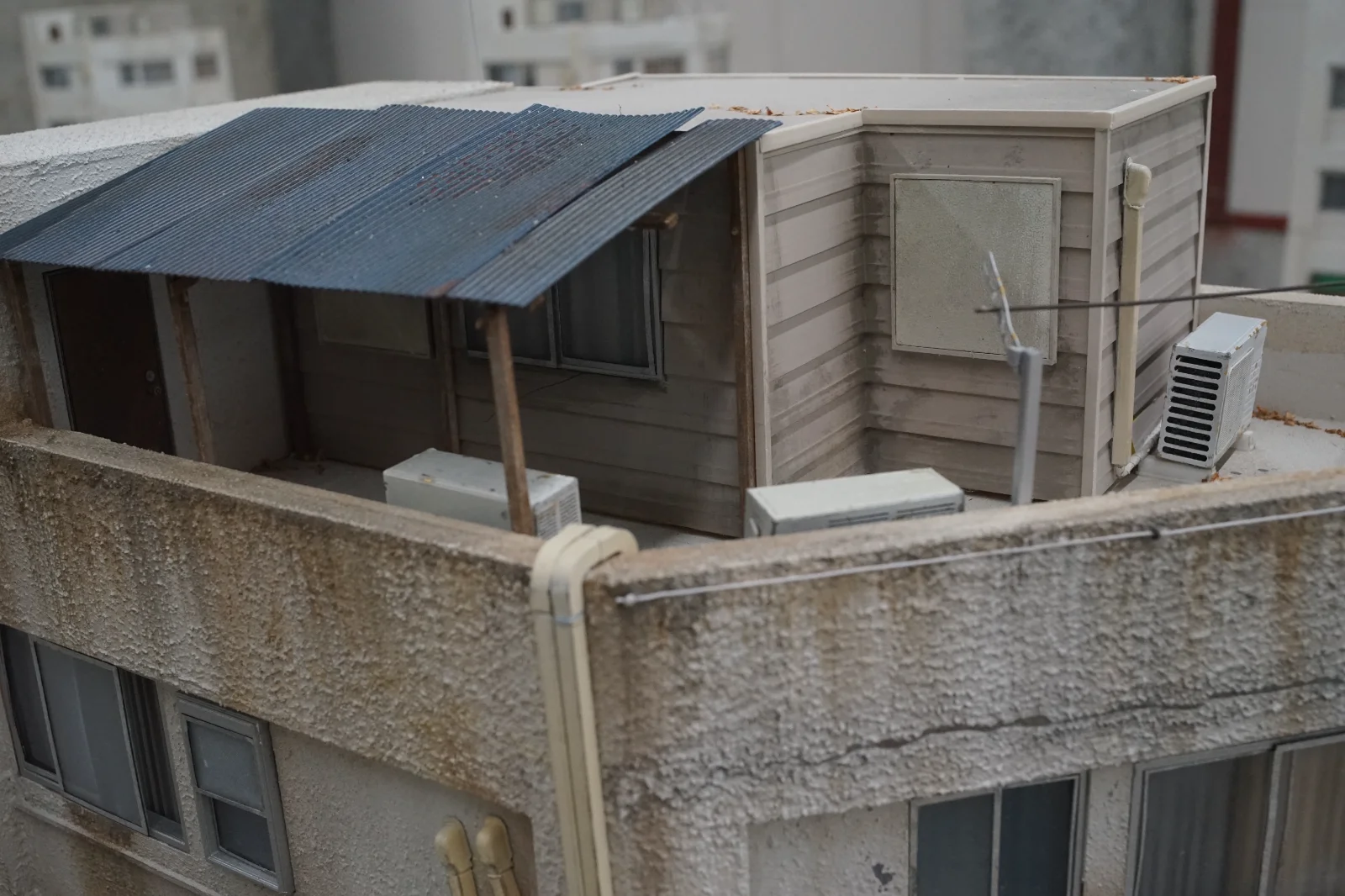
And at i Gallery Osaka, the Stockholm-based artist Christopher Robin Nordström is having his first solo show in Japan: miniature architectural models built from what he's observed of Tokyo through Google Street View, the same house rebuilt eight times across different moments, each repetition holding a small, accumulating drift.
By the time we reached Shinsaibashi, Namba already felt like a different trip — not because the art changed registers, but because the city around it did. A department store, an underground mall, a fashion house's project space, two small galleries: none of them built for art alone, and all of them holding it anyway. Maybe that's closer to how a city actually keeps its art than a single gallery district ever could.
Interested in exploring these galleries with a local guide?
Koh Yoshida, a certified Osaka tour guide and the curator behind ArtRoute, offers private art gallery tours covering the areas in this article.
Book a Guided Art Tour →Via Viator · Private tour